Be the change you want to see in the world - Gandhi

Thursday, June 14, 2012

Stingray Sneakers: Ethics & Bio-Customization


Heinous? Hilarious? Amazing? The fashion industry never fails to shock. A Thai-based company called Rayfish Footwear has brought bio-customization to the masses for a cool $1,800 once production is fully underway near the end of 2012. If you have to have them now, it will cost you - $14,800 - $16,200 for a pair of sneakers! Exclusivity reigns supreme in this industry and Rayfish was just crowned. At least until they drop in price, are knocked off and found in every Chinatown around the world.


What Rayfish has done is isolate the genes that express colour and pattern in a variety of animals and allows the consumer to combine these genes to create unique new prints. Brilliant really - they've made the average consumer into the designer (eliminated the need for an actual designer and passed the job onto you - genius from a corporate capitalist point of view) and they charge a shitload of money to grow your exclusive stingray and make it into shoes - just for you. 


I have to admit, I spend some serious time playing around on the website - designing endless new prints.  Here's how it works:


* Design your pattern, mixing and matching the DNA from snow-leopards to angel fish resulting in unique two colour patterns. Combine up to three different DNA's for the background colour, three for the foreground and three for the pattern. Yes, you can own a pair of sneakers made from up to '10' different  animal DNAs (including the sting ray itself).


* Rayfish makes your special DNA concoction and inserts it into a fetal stingray. As the ray grows, it does so expressing the aesthetic characteristics of the animals you chose.


Photoshopped???


They are grown in these tanks according to the website.


The final product is Shagreen or stingray leather. Shagreen is a rough, granular untanned leather. Historically it was usually made using the rump area of a horse and for providing grip on weapons such as bows or swords. The Art Deco era popularized its use for furniture and the main source became sharks and stingrays. It has been used for many random products; fashion accessories, Rubik's cubes ($1,950), book binding and shoes. 


It is a luxury leather that requires a fairy lengthy processing stage and is more difficult to work with than a standard cow-hide. A Shagreen cuff from Canadian jeweller Myles Mindham runs between $1,300 - $5,000 and Hermes 2010 furniture collection is made with Shagreen - Price Upon Request, no surprise there. The luxury furniture designer Karl Springer's iconic chair is made of Shagreen along with many other of his designs.  


Ha! I guess if a  Shagreen leather Rubik's cube is $1,950, $1,800 for shoes that are bio-customized seems like a steal.


Myles Mindham

Louboutin + Platers
 Using Shagreen is not new and the same ethical issues apply with all exotic leathers that have been used for centuries or any leather for that matter. Historically, luxury items were made in very small quantities of unparalleled quality, ageing gracefully and passed on through generations. Unethical to some but totally sustainable in the sense that they were hand made and very small amounts of raw materials were used due to cost - not the way cow-hide, cotton, pony hair and even ostrich are used today. We buy soo much cashmere these days the increase in cashmere goats have had devastating environmental and cultural effects on the Mongolians. Overgrazing is leading to desertification and a shrinking water table while the increasing demand has been eroding the nomadic herding culture.


This bio-customization brings many ethical and environmental issues onto the table. To grow an animal just to use it for shoes just seems reckless and unnecessary. Side note: Can't you just wait to see how PETA reacts to this! The company has already received much back lash and has released a statement clarifying that the meat will be used for food, not thrown away. Fair enough - cow hide is a by-product of the beef industry. They claim this is more humane than factory farmed beef and its leather by-products, which could be true but then again Asia is not known for its rigid regulation in the production sector. But genetically modifying an animal for fashion??? I'm sure it is not painful to the animal - it is just changing colour and pattern but restricting them to those tiny tanks, do we really need shoes that bad?  It's an ethical slippery slope. 


What really gets me is that they call this product SUSTAINABLE. Okay, sustainable because you are breeding your raw material so you have a bountiful endless supply. What about the subsequent processing of the leather? What about the bio-hazard waste because you are genetically modifying animals? What about all the energy used to grow the stingrays? What about the glues used to make the shoes? It's Thailand - environmental laws are weak at best and is there even regulation for animal welfare in this type of situation? Most likely using a glue that contains PVC (polyvinyl chloride) that will eventually release VOC's (volatile organic compounds), toxic, hazardous chemicals. $1,800 is obviously cheaper than all the other Shagreen products out there so I feel like the quality of these shoes will not be the same as Louboutins or a Hermes piece. How long will it last then?  What about the rubber for the soles? Are those eyelets made with metal containing nickel? Can they be recycled or do you just toss 'em in the garbage when you're done? I could go on and on but you get the point, farming an animal does not make fashion products 'sustainable'. 


What's scary is the promotion of using stingray leather for a fairly democratic fashion item - the sneaker. Shagreen is a luxury leather - its use should not be encouraged as luxury items and brands become more accessible due to technology and economies of scale. The stingrays typically used for this leather have very slow rates of reproduction. The University of British Columbia has found that demand for this leather is increasing and imports from Thailand and Indonesia (main producers) has doubled since the 90's putting pressure on the stingray population. 


Do we really need to be using stingray leather? 


Do we really need to start farming stingrays for fashion?? Cows - stingrays - slippery slope. 


This brings up a lot of questions and ethical dilemas.


Some think this is a hoax - I really hope it is. There is no mention in any scientific literature of this latest achievement. Genes work in tandem and it does seem like a stretch that you could pick and choose genes/traits from all types of species.


 If we are to use bio-customization technology, it should be for something more worthwhile than fashion shoes. Don't get me wrong, I love, love shoes but there's a limit and this is it. 


check it out for yourself rayfish.com.


Friday, May 18, 2012

New Trend? Shopping with Facebook: No Thank You

https://www.facebook.com/ceaBrasil/app_185396351576200
I guess it should come as no surprise that this marriage has happened but it doesn't mean I have to 'like' it. Brazilian retailer, C&A, has networked its hangers in-store to count in real-time, Facebook 'likes' for all items currently being sold. They call this new system - Fashion Like. I feel like this is a real step backward in many ways. I will acknowledge that there is a certain awe factor for this marketing marvel development but are we really that self-conscious that clothing purchases need to be approved by the social media community? Bring on the groupthink.


Personally, the more 'likes' an item had, the more I would venture away from buying such an item (leaving me to purchase low-count garments). I'm sure there are those out there who would feel the same. I do think though, that this idea was developed and implemented because it will increase sales of their product. It is not enough these days to have your shopping buddy give credence to your purchases, today we need personal style blogs and apparently a 'like' counter to validate our fashion purchases. I would 'like' to think that people would not be swayed by Facebook counters on hangers but it seems like everyday I'm reading about some 'it' item that Princess Katherine Middleton or the Olsens etc... wore and is sold out the next day. So if that can be used as any sort of predictor, this counting hanger will be a hit for the retailer. 


Ethics: Advertisers have found a new way to play upon the insecurities of women on how we look, dress and the need for a second opinion; is this going too far?


Consumption and Waste: Shouldn't we be encouraging personal style and move away from mindless consumption. Will this increase consumption rates by creating more desire to purchase all these 'liked' items? A new virtual peer pressure if you will. Will stores be left with piles of clothing that are not 'liked' that might have otherwise sold if they didn't have a counter? This really doesn't help consumers buy better and by this I mean, buying what you 'like' as an individual and what looks good on you. Not all styles and fashion look good on everybody. I have loved many beautiful clothes only to try it on and realize on me, it's an epic fail. Learning to dress for you and what makes you feel amazing is not an easy task given the fashion pressures society faces these days. 


Not to mention, these 'likes' are based on pictures on the web. Fabric, fit and quality cannot be assessed, so is this a true reflection of how great an item really is? Therefore, should we let groupthink guide our purchasing behaviours? 


Are there any measures in place to stop the retailer from voting a million times on its own products? Employees sitting in the back room hitting 'like' repeatedly. I know that sounds cynical and very conspiracy theory but historically speaking there has been way more bad corporate behaviour than good.


Worse yet, what if someone switched the hangers and you came home only to realize you didn't buy the 'it' piece! Oh, the horrors. 


Tuesday, April 10, 2012

H&M and The Pareto Principle


Two weeks ago while I was blissfully enjoying the spring air, riding my shiny new red bike to work, unbeknownst that I would become a victim of a hit and run and the recipient of a broken arm/wrist. Hence my sad absence from writing; it is unbearably slow typing with one hand! However, my rage has subsided and I have come to terms with the fact that I can now only really wear about 20% of my wardrobe due to my cast. Which, oddly enough is not too different from the percentage of clothing that I normally wear from my wardrobe. I kind of am a uniform girl and constantly gravitate to a certain set/style of clothing. In fact, the majority of people adhere to the 80/20 Pareto Principle when it comes to their wardrobe. We really do wear 20% of our clothes 80% of the time and the other 80% we only wear 20% of the time. For me, the challenge is how do I eliminate that 80% that is taking up so much room for such little face time?


Normally this elation and freedom I feel of really not having to put too much thought into what I wear only comes around when I'm travelling. Backpacks only hold so much room and I'd rather save the space for treasures and goodies I pick up along the way. This cast along with my 1 year pledge to not buy clothes in the Free Fashion Challenge (http://freefashionchallenge.com/) has left me feeling out of the loop but also perhaps a bit more free and happy (it is a little painful and hard at times for this fashion junky I will admit). The pain is dulled because I do have the option of making clothes for myself and hopefully use up some of the material taking over my closet. The biggest reward I think will be the fact that I won't be adding to the 80% of my wardrobe that I seemingly don't wear. Oh, and the money savings.


So what does this have to do with H&M? Well, with the launch of their 2012 Conscious Collection a few days away, I couldn't help but analyze their great effort (which so happens to also be part of my thesis). I have to pat them on the back for their efforts because putting yourself out there in the CSR (Corporate Social Responsibility) game unfortunately opens you up to criticism on your efforts. So yes, H&M's CSR activities are courageous and a huge step in the right direction. There are, however, a few things to think about.


I don't really understand why their 'conscious' efforts cannot extend year around, running through all their regular seasonal collections? I've seen a few random pieces here and there but not much at all compared to what they produce regularly. The big hoopla over one or two collections per year may be perceived as more of a media ploy than anything. I also feel that a truly 'conscious' collection would be one that caters to that dear 20% that we wear 80% of the time, not more 80%er's. Frankly, when you look at the majority of H&M's product, oh let's say 80% is seemingly catering to that 80% we buy but rarely wear. They are the 'it' guys for disposable clothing/looks.


H&M has answered my questions through a recent webinar hosted by NICE (a Nordic sustainable fashion initiative) that while they do produce a lot of product, it is the CONSUMER'S RESPONSIBILITY to choose wisely. That I can agree with, we are responsible for the choices we make. However, H&M can also be a responsible producer by offering a better product that will last longer and making less of it, they shouldn't promote conspicuous consumption and unnecessary spending. Fact is, if it's out there to be sold, someone will eventually buy it. I understand they are a fast fashion company but fast fashion is starting to get old itself. The trend cycles are so fast I swear I've bought the same cheap sequined top three times over in the past decade. Fast fashion is all about the 80% and maybe it's time to banish Pareto and come up with a new principle for fashion clothing because there is just way too much of it around. I think consumer's need to be wiser and more responsible and so should the producers. 


Don't get me wrong, I do think there is importance to that 80% but after having looked at my 80%, it definitely doesn't need to be 80% of the clothes I own. The cocktail dresses are necessary for those random functions, the interview outfit, your 5" party stilettos etc. These are important staples for the random 20% time you need them. The acid wash skinny Cheap Monday jeans that I wore for all of 6 seconds, not so much a keeper. Should really not have bought them but oh there they are, taking up space because I feel guilty about getting rid of them. That, those acid wash jeans, are the 80% that need to go and NOT be replaced. The challenge continues. I would like the 20% that I wear 80% to be more like 90% of my wardrobe that I wear 90% of the time and 10% for those random 10% times I need them. 


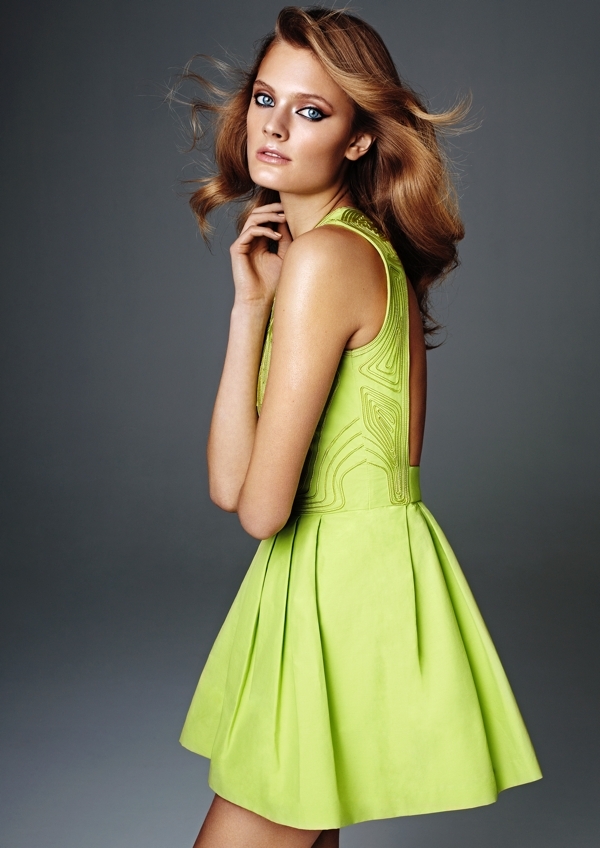
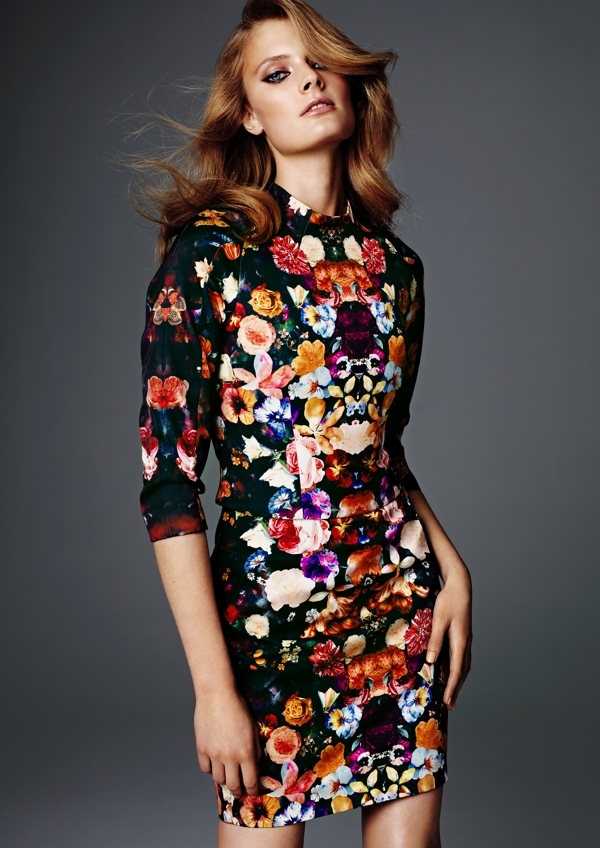
So here are some shots of the upcoming H&M Conscious Collection and well maybe not this year but if i think that's it's a 20%er, it might be worth the investment. It definitely is not worth it if i think it will end up being an 80% (or for me hopefully - 90/10 rule). Don't buy it though just because it's eco and you never have any intention of wearing it; it's just playing into the same game. Either way, they have done well and should be acknowledged and applauded for doing what a lot of other companies are not doing at all. 


Monday, March 19, 2012

To Trend or Not to Trend? The Case of Hologram Jeans

  
Blumarine F/W 12
Blumarine F/W 12
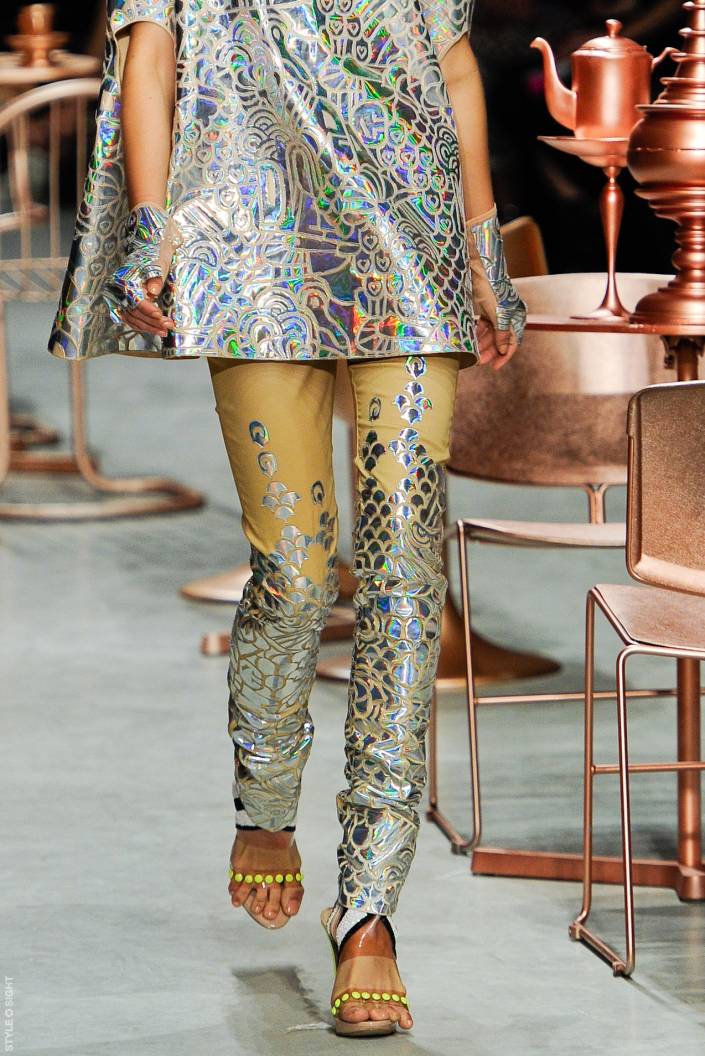
The future is in today and out yesterday, that's how fast fashion feels these days. Right now we see the emergence of the futuristic theme yet again on the runways recently. One of the translations of this theme is taking form in holographic materials, mainly denim. Holographic denim will only be in style for --- oops, there it goes. This begets the question, how heavily do, we as consumers of fashion, invest into a micro-trend/fad like holographic denim?


Micro trends such as these really should just be left to the upper crust of fashion society. First of all, the Hussein Chalayan version of this trend - I like it, it makes me want to wear it. However, make and should are two very different concepts when it comes to the fashion/style game. I'm not going to buy the Hussein Chalayan version because, well I know without a doubt that it is far beyond the reaches of my budget (For the record, hands down I would go for the shoes before the pants). Any diffused version that I can afford by the likes of Zara, H&M, Topshop etc... will just not do it justice. Not to mention that probably by summer's end there is a good chance you will already feel outdated wearing them. Its not exactly the kind of piece you can work into your wardrobe over the next few years. Then what? Back into the sartorial wasteland that has taken over most of the closet space. 


Even if you find  a decent knock-off of this trend for say even $30, the emotional roller coaster that ensues just doesn't seem very appealing. First there's the hunt to find the perfect pair within your budget that are also the most flattering followed by the thrill of the catch. Next is the ego-high to be one of the firsts parading around, the covetable envy, ohs and ahhs of those who weren't so quick. Then you start to notice everybody else wearing them and maybe this is your comfort zone (fitting in with the crowd) or your worst nightmare. At some point, anxiety or some sort of related feeling starts to creep its way in as you struggle its wearability. There's the guilt of only having worn it for a short while but that is outweighed by the terror of being seen in last month's 'it' piece that is now over and every tween in sight is wearing. If the tweens are wearing it, you know its over for you. Not to mention the fact they look amazing in it with their skinny tween legs (think Willow Smith). It probably is better suited to them in the first place. OMG, who needs that emotional kind of turmoil? 


So maybe the emotional roller coaster is slight exaggeration but maybe not. I know I've definitely been down that road with those questionable pieces. Yeah I loved my studded t-shirt for all of 1 month before it just seemed pathetic to me. Perhaps a micro trend like this is best left to the professionals - those who can afford the real deal. Sometimes it is just a lot more calm to admire from afar. Especially since these are pretty environmentally damaging to make - all over finishes that use multi-tonal sprays, thick PU coatings etc.... We definitely don't need millions of them headed to landfills or donation bins once we've decided to finally get rid of them a year later. What exactly is Salvation Army going to do with all this stuff once it hits their door and all those developing nations who receive our cast-offs?


This isn't the first and it won't be the last trendy 'it' item who's viability we should question. In this case, I think it's best to leave it to those who dress for getting photographed on the street. Sure they'll probably only wear it once, maybe twice but at least if we can keep it to the handful of 'it' people and just enjoy them for their Facehunter/Man Repeller moment of fame. We can feel better about knowing we are keeping one less item out of that sartorial wasteland.


For this one, I think I might get some holographic nail polish and call it a day. 


Hussein Chalayan F/W 12
LOVE this look
Hussein Chalayan F/W 12

Hussein Chalayan F/W 12
Blumarine F/W 12
Whoa, words fail me here
Manish Arora S/S 12
Love it, but how many times and places do you think someone can wear a head to
toe holographic look before they acquire an unfortunate nickname?
Manish Arora S/S 12
Theory
Katie Eary
Nope, the guys were not forgotten on this one
Ksubi F/W 12
Yup, the allure is gone by the time I see these.


Tuesday, March 13, 2012

Fast Fashion vs. Food Security


Food security has definitely become a hot topic and with good reason. As I've been reading about the issue for the past year, it dawned on me - the idea of sustainable fashion is starting to enter into the stream of consciousness of mainstream society. Whether people fully understand it or not, most associate natural fibres with environmental friendliness. Even if you don't take into consideration the influx of sustainable fashion, natural fibres have become quite popular in the past 20 years; there has been a steady increase in demand especially for cotton. Natural fibres are generally associated as more luxurious than their petroleum based counterparts such as the ever popular polyester (where the 60's & 70's did not help its reputation). 


So the luxury association coupled with decreased costs in manufacturing due to exploitation of labour in developing nations, has not only allowed the industry to democratize fashion but it has been able to democratize luxury fibres as well. I can't be the only who's noticed that everything now has 5% cashmere added to it for that extra softness and allure. Since most of these fibres are grown in developing nations and there has been an increased consumer demand that has lead many farmers to switch from food crops to fibre crops. 2011 saw the highest cotton prices to date enticing farmers across the globe to cash in on this, well new cash crop. We all know how supply and demand functions - 2012 will see a surplus of cotton causing prices to crash. Good for the fashion capitalist creators, not so good for the farmers, not so good for food security. 


While food security is not an immediate threat to those of us lucky enough to live in the Western world it is an unfortunate reality for many in developing nations. Not only are they the farmers who are losing land to fibre (trying to make some sort of living). If there is not enough food produced, well, somebody's not eating. These nations are also not big importers of food as they are usually the producers. Also, if crops fail (both fibre and food), there is no income, no income - no food. It's a pickle all right.


The other consideration that seems to often get swept under the rug - burgeoning economies and middle class expansion in nations such as India and China. The more the citizens of these countries get a taste for fashion, the more they want to take part in it too, and who can blame them. Fashion is all about the allure and glamour. That's what made it into this lustful trillion dollar industry. The question is, how are we going to fashion all these people?? The planet already has more acres dedicated to fibre crops than food crops. Not to mention food crops like corn and soy are being used to make eco-textiles for fashion. It's taking the whole 'starving for fashion' saying maybe a little too far. 


The US, China and India alone account for more than 50 million acres or 42% of all agricultural arable land ( never mind other major regions like Africa and South America) while global food crops only come in at 40 million acres. And then there's the biofuels, what about land for biofuels?? Currently it stands at about 32 million acres. Then we have to find room for the ever increasing global population. It's amazing, fashion right now is beating out food, fuel and living space for people. 


Maybe this will be the slow death of cheap fast fashion. Fashion retailers will only be able to undercut so far before cost increases for fibres will translate to the consumer. Truth is, we really don't pay the true cost of our clothes in the first place. Once we do have to start paying true costs, maybe we'll think a little bit more about what and how much we buy. Iggy Pop said it well, 'lust for life'


Wednesday, March 7, 2012

Designer Profile: Paola Mirai - Transparent Tech Jewels

Artist, designer, alchemist and art director based in Milan, Paola has transformed technical detritus into covetable jewellery. After five years of research, Mirai perfected her 'orotrasparente' a home brewed clear lightweight resin. Her pieces are a combination of these technological cast-offs that come from old Apple computer screens, watch cogs, clock springs and circuit boards with her 'orotrasparente' into a wide range of cuffs, cuff links, rings and bracelets that seem to float above the body. Everything is one-of-kind as Paola crafts every individual piece herself. 


What's really inspiring is her aim to share her craft through workshops. It appears the participants bring their own technological cast-offs to re-transform into a unique hand crafted accessory. 


I just love the use of the circuit boards, maybe it's being a child of the 80s and the exposure to movies like Short Circuit and Encounters of the Third Kind. It's hard to repurpose and make tech look modern in a good way. You would never know it's repurposed and to me that's when design is successful. This makes me want to build fashion robots or at least start taking apart old electronics.