Be the change you want to see in the world - Gandhi

Wednesday, November 28, 2012

Meaningful Consumption: H&M x Maison Martin Margiela

H&M x MMM launched over a week ago now and yes, I did brave the launch day shopping frenzy but in a more casual afternoon shop. I have a complete refusal to stand in line and fight over H&M [designer] garments as I am fearful of the assault capabilities of the overly studded accessories I see everywhere lately. Never mind the 'crazy' that happens when you have frenzied fashion shoppers fighting over limited stock. However, this time around I feel like the 'fashion hype' is starting to calm down as the only piece that was sold out by the time I got there were the oversized jeans. A few people I know had braved the line and the 10 minute shopping limit in the morning. They noted the crowd was unusually small for a designer launch.

This is perhaps due to the low key nature of MMM. I have never seen a brand so vehemently oppose any sort of publicity or advertising. Margiela is the faceless designer who has yet to be seen taking the obligatory designer bow at the end of a runway show. Interviews are conducted through fax and the Maison Margiela only speaks in 'we' terms. The brand carries itself in a very understated manner (until this H&M collection perhaps?). The clothes, however, are everything but understated.

I have to say, compared to previous collaborations, this collection is by far the best. The collection consisted of undiluted re-edition pieces from the archives and the quality beats out all other H&M collaborations. Sweaters and blazers were made from 100% wools and cashmere. The faux fishnets were a nice thick spandex that did not stretch out to a sheer unsightly distorted mess. Quite frankly, I have given up on H&M awhile ago as the quality is so low and the super synthetic nature of many of the garments (materials & finishes) fuels fears of spontaneous combustion.

In terms of promoting meaningful sustainable 'conscious' consumption this is H&M's best effort, which I feel was not their intention. While the collection was not made from environmentally-friendly materials, they were high quality, 100% fibres and not blends and I do not fear the typical unravelling of  H&M apparel within a few wears/washes. Not to mention the [un]wearable nature of MMM designs. A lil' bit awkward. a lil' bit odd. not just boundary pushing but out of bounds amazing. MMM is not for the faint-hearted. Which is what makes these pieces life-timers. You don't buy Margiela and throw it out. You keep it for a very long long time.

High quality, well made, well designed clothing is sustainable. There is so much more to sustainability than environmentally-friendly materials. There is more gray when it comes to sustainable/ethical clothing than black & white right now.

This collaboration was perhaps a true shot at fashion democratization. A chance [democratization] for anybody really to own a MMM piece and not some watered down knock-off version. So while some might question exactly what we've bought into, for once I actually felt okay buying into this.


Some of my favorites from the collection.


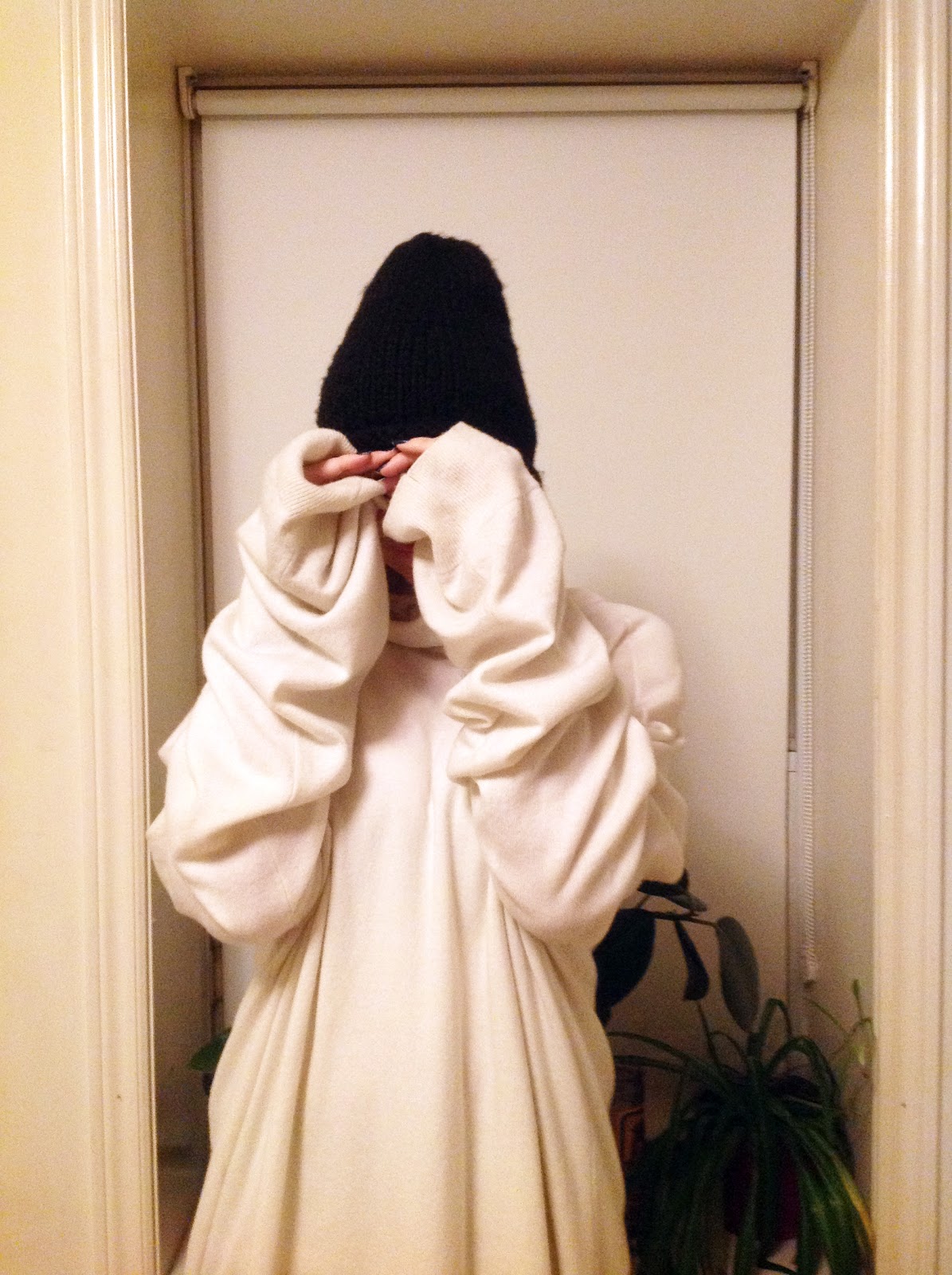
I couldn't resist and bought this extra large cashmere sweater in both the cream and navy. 


My friend Sarah convinced me to actually wear one of my new purchases and let her take my photo -  can you feel my awkwardness....
No more photos!! but look at those amazing sleeves.
If only Tyra could see me - smizing eyes best (worst)!!

My MMM blazer - keeping the tailor's stich in for the meantime


Tuesday, November 20, 2012

re [by] cyle your wool: Imogen Hedges


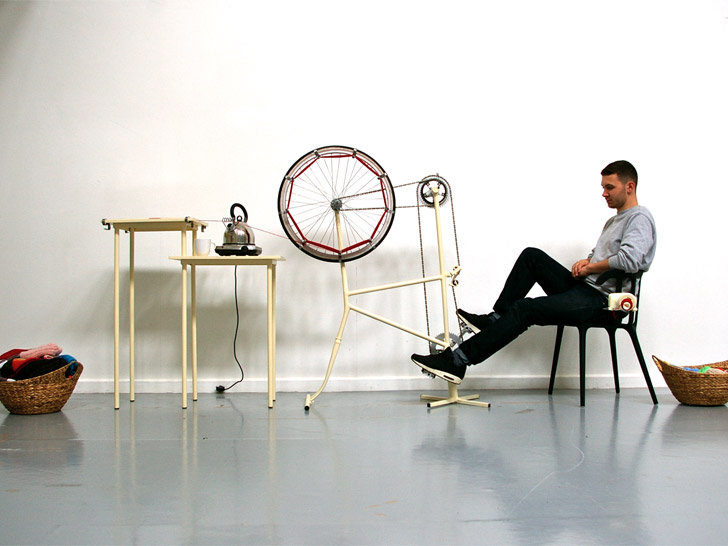
Meet the un-knitting machine. Imogen Hedges, a London based furniture-product designer, created this pedal-powered un-knitter to recycle unwanted knitwear. After a discovery that charity shops spend countless hours unraveling knitwear by hand, an idea was born. Imogen says "they can make more money out of selling the wool than they can from the sweater". 

This contraption is built around an old bicycle, has a seat and allows for wool and other continuous fibre yarns to be un-spun  along the circumference of a wheel. The yarn passes through the steam of an electric kettle to remove kinks and winds up on a hand-cranked spindle. Clever. Ugly sweaters no more, a quick stint on the un-knitter yields balls of yarn ready for re-knitting. 

This machine does so much more than just unravel yarn. It restores a sense of value and meaning to consumer products by reconnecting the mode of production with the individual. It promotes the type of behaviour change needed to develop more sustainable consumption practices.

Thank you Imogen Hedges. 

The un-knitter will be on display at the National Centre for Craft and Design in Lincolnshire on the roof gallery from November 10 to January 6.


"My grandmother spent a lot of time knitting sweaters but my mum threw them all away once we'd outgrown them because she did't think anyone would want them. With my machine you'd be able to take them apart and knit something new." Imogen Hedges.


Imogen Hedges from Rachel Mc Closkey on Vimeo.

Friday, September 14, 2012

September issues & fashion democracy

The September issues have been digested, the tour de force of fashion weeks have just ended, and everyone's favorite fashion season is in full swing. The September issue is the only magazine month that I allow for full indulgence, carrying thirty plus pounds of glossy pages home. This year's American Vogue, the reigning heavy-weight champion, came in at an impressive 4.5 pounds. 4.5 pounds and almost 900 pages of alluring fashion in one magazine alone. Now throw that into the mix with street style blogs, fashion week blogger specials plus online magazine content, it's almost, dare i say.....too much fashion.

There is not even a clear distinction between seasonal trends anymore, it has all become one continuous blur. This summer, while perusing through the resort and pre-fall collections, it occurred to me how commonplace these collections had become. It's like google and facebook, they seem like they've been around forever yet it actually hasn't been that long - not even a decade. There is no denying how important and how fast this industry has grown. Everybody's a fashion designer, everybody's a blogger or street style/fashion photographer etc, etc, etc... Never has the general population been so 'into' fashion as right now. Why? Good ol' democratization of fashion, brought to you buy cheap labour and economies of scale. 

Fashion democracy is a good thing, why shouldn't everybody enjoy the latest fashions. For ages, fashion was an expression and/or source of status and elitism. So, yeah us?!? Yes we finally have fashion freedom and now more than ever I can't help but feel that this is the last thing we have. Fashion isn't an expression anymore, it's a shackle to vacuous consumerism. With so much out there, you can't help but feel that if you are not participating.....well something must be wrong with you. Okay that may be a bit dramatic but hey that's fashion for you...dramatic. 

Yes there is truth in that the boundaries for what is fashionable and stylish are wide open. But you can't help but notice that slowly, everyone is starting to look the same. Globally. While they are slight nuances in what the Parisians are wearing vs. the Danish or the Japanese, everyone on street style blogs more less looks the same. So while I may wear a pair of flatforms in a totally different way from those around me, bottom line is they are being worn everywhere, by someone, in a different way. Fashion freedom? or fashion slave? When flatforms first appeared, I had to have a pair. Still love em' but low and behold, a new shoe trend has appeared and I am now desperately seeking the sharp toes slated for spring. 

Why do I want these shoes? I like them, but why do I like them? Because it's new? Because it's the next 'it' shoe? I find it hard to answer these questions because I definitely don't like all new trends. So where does this compulsion come from?

I ask these questions because I don't know how this industry is going to become sustainable with the level of consumption that is occurring. Fashion slave/fashion freedom, what will happen? I went on a fashion free challenge. It was a good exercise in self-discipline but it was actually really hard. It really made me wonder, can we stop consuming? Is fashion being so 'in fashion' going to peak and fade like the wedge?
In the bid to essentially one up all the time with a look that's all your own and street style blog worthy - there is a natural pull to consume. Never mind the 4.5 pounds of fashion Vogue throws at us every September. 

Tommy Ton for Style.com

Here is a shot by Tommy Ton at NYFW. I actually really love this look, she totally pulls it off. But how many times can one possibly wear a head to toe Bart Simpson print duo? What will be Bart's fate when she's done with it? It could be a hard sell at a thrift shop. This girl obviously has a great sense of style, and while original, is it a sustainable, you will be in my wardrobe for the next ten years, piece? I think designer's are actually the epitome of sustainability in a way. They have a distinct look and aren't really participating in consumerism the way their customers do, in the fashion arena. Karl Lagerfeld, Marc Jacobs, Tom Ford, Jean-Paul Gaultier etc... don't change. Karl's been wearing the same ponytail and sunglasses for over 30 yrs. They do not bend to the whims of trends and stay true to their trusted classics. Just saying their name, you get a very clear picture. 

Now how's this for fashion democracy - the Balenciaga 'Galaxy' sweatshirt (which is sold out might I add) will set you back $3,150. While I love the shape - seriously, how can this sweatshirt be worth this much and how many times can one or will one really rock this look? It is just very specific to a particular season. Wait, maybe it's the 'shiny technical fabric' that it is made from. That's the description on the Balenciaga website under product details. Talk about fashion democracy - clearly you are not fashionable/street style worthy if you are not wearing the coveted sold out 'Galaxy' sweatshirt. Also, could you imagine paying that for a top only to see everyone else at fashion week wearing the same one! They've all worn it the same way too - skirts and clutches (mostly in hues of blues and fuscia). Yes, this 'it' outfit does feel very democratic, almost as democratic as US politics.

Now for the street style evidence collected from every imaginable street style blog. 

p.s. I am a fan of Balenciaga, I think Nicholas is amazing. This just reminds me of the Christopher Kane Gorilla t-shirt which retailed at almost $500 and lasted what - one season. Don't see too many of those kicking around on the fashion scene today. Where did they all go......


From the Balenciaga website  $3,150


Where'd you go?????


Friday, June 15, 2012

Summer Scarves & Social Responsibility: Nepali by TDM


After having spent quite a bit of time in Nepal last spring/summer, I can definitely attest to the need for women to become self-sufficient and gain some independence. To nurture these women's amazing weaving skill and provide opportunity for them to make an income that will support them and/or their children - a living wage. The nature of weaving allows these women the opportunity to work from home and make an income while caring for their families. 


Nepal is an impoverished country with unrelenting political instability that has left most of the country struggling to adapt to the chaos while trying to make some sort of living wage. The Maoist insurgency led to a mass flooding of people to Kathmandu, the loss of the Royal family and a country with no official constitution. 


Weaving and other textile crafts is a tradition and skill that has remained among Nepali women. Unfortunately, this scenario leaves these women open to labour abuse as the economy struggles to uplift itself. There is massive corruption and it is a 'rich get richer, poor get poorer' situation.  This is when companies from developed nations enter and typically take advantage of low low labour wages, lack of regulation and the desperation to do business with companies from developed nations. 


Supporting fair-trade and environmentally conscious crafts is one of the best things we can do as consumers. Vote with your dollar. While it is impossible for us to be 100% confident that what they say is what they do - it is better than the alternative - buying from the brands in the mall! The big, chain store brands pumping out millions of product a year at any social/environmental cost. 


Nepali by TDM provides access to education, healthcare  and above market compensation for their women weavers. They use azo-free dyes and natural fibers such as bamboo, wool, silk and cashmere. Everything is hand-made. 

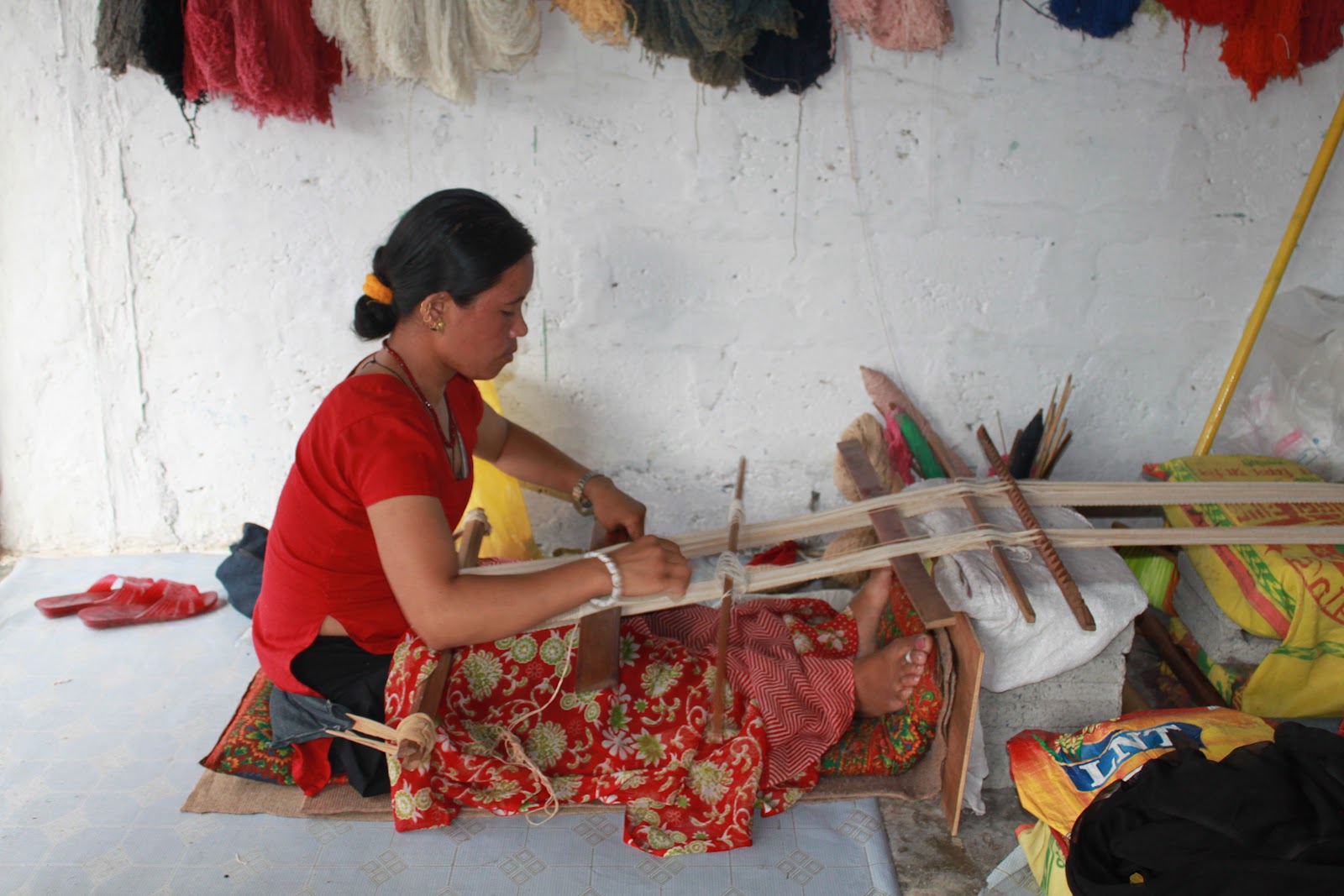
While trekking and travelling throughout Nepal I went to visit as many fair-trade weaving co-operatives as I could. Even in the rural villages you get to see these women weave by hand on these long, thin looms. It's so amazing to see these scarves available to consumers in the West and know that these women are able to make a living wage from the fruits of their labour. Skill-development of the Nepali women is one step closer to breaking the cycle of poverty.


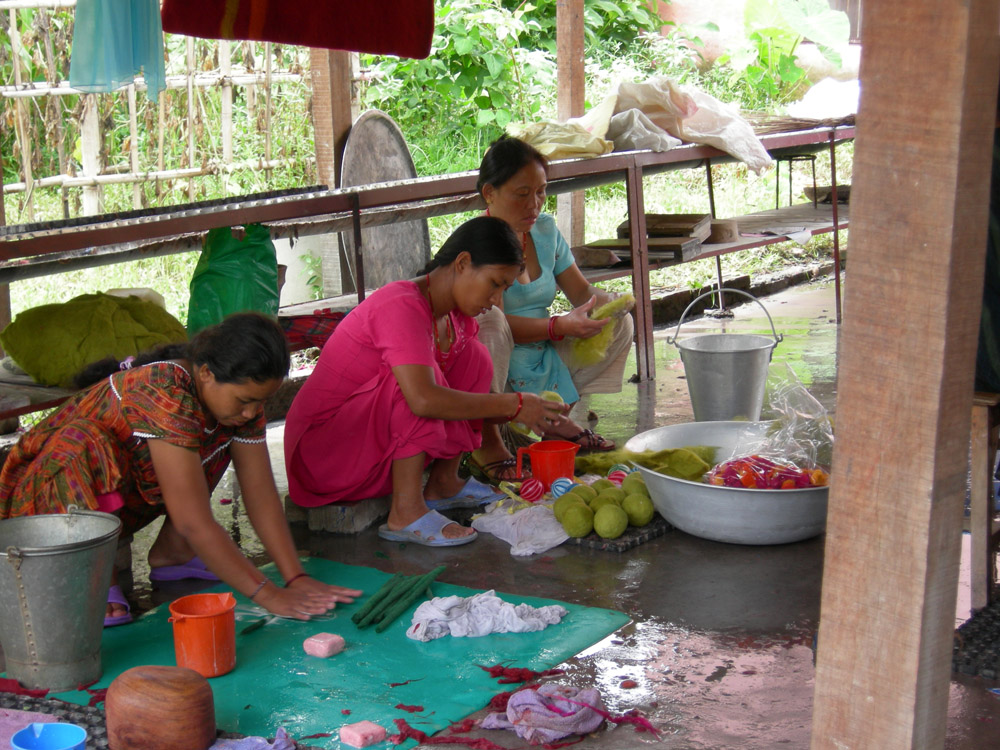
Here are some pictures of a fair-trade co-operative in Pokhara, Nepal.


My friend Kaitlyn buying a great wedding gift.


Thursday, June 14, 2012

Stingray Sneakers: Ethics & Bio-Customization


Heinous? Hilarious? Amazing? The fashion industry never fails to shock. A Thai-based company called Rayfish Footwear has brought bio-customization to the masses for a cool $1,800 once production is fully underway near the end of 2012. If you have to have them now, it will cost you - $14,800 - $16,200 for a pair of sneakers! Exclusivity reigns supreme in this industry and Rayfish was just crowned. At least until they drop in price, are knocked off and found in every Chinatown around the world.


What Rayfish has done is isolate the genes that express colour and pattern in a variety of animals and allows the consumer to combine these genes to create unique new prints. Brilliant really - they've made the average consumer into the designer (eliminated the need for an actual designer and passed the job onto you - genius from a corporate capitalist point of view) and they charge a shitload of money to grow your exclusive stingray and make it into shoes - just for you. 


I have to admit, I spend some serious time playing around on the website - designing endless new prints.  Here's how it works:


* Design your pattern, mixing and matching the DNA from snow-leopards to angel fish resulting in unique two colour patterns. Combine up to three different DNA's for the background colour, three for the foreground and three for the pattern. Yes, you can own a pair of sneakers made from up to '10' different  animal DNAs (including the sting ray itself).


* Rayfish makes your special DNA concoction and inserts it into a fetal stingray. As the ray grows, it does so expressing the aesthetic characteristics of the animals you chose.


Photoshopped???


They are grown in these tanks according to the website.


The final product is Shagreen or stingray leather. Shagreen is a rough, granular untanned leather. Historically it was usually made using the rump area of a horse and for providing grip on weapons such as bows or swords. The Art Deco era popularized its use for furniture and the main source became sharks and stingrays. It has been used for many random products; fashion accessories, Rubik's cubes ($1,950), book binding and shoes. 


It is a luxury leather that requires a fairy lengthy processing stage and is more difficult to work with than a standard cow-hide. A Shagreen cuff from Canadian jeweller Myles Mindham runs between $1,300 - $5,000 and Hermes 2010 furniture collection is made with Shagreen - Price Upon Request, no surprise there. The luxury furniture designer Karl Springer's iconic chair is made of Shagreen along with many other of his designs.  


Ha! I guess if a  Shagreen leather Rubik's cube is $1,950, $1,800 for shoes that are bio-customized seems like a steal.


Myles Mindham

Louboutin + Platers
 Using Shagreen is not new and the same ethical issues apply with all exotic leathers that have been used for centuries or any leather for that matter. Historically, luxury items were made in very small quantities of unparalleled quality, ageing gracefully and passed on through generations. Unethical to some but totally sustainable in the sense that they were hand made and very small amounts of raw materials were used due to cost - not the way cow-hide, cotton, pony hair and even ostrich are used today. We buy soo much cashmere these days the increase in cashmere goats have had devastating environmental and cultural effects on the Mongolians. Overgrazing is leading to desertification and a shrinking water table while the increasing demand has been eroding the nomadic herding culture.


This bio-customization brings many ethical and environmental issues onto the table. To grow an animal just to use it for shoes just seems reckless and unnecessary. Side note: Can't you just wait to see how PETA reacts to this! The company has already received much back lash and has released a statement clarifying that the meat will be used for food, not thrown away. Fair enough - cow hide is a by-product of the beef industry. They claim this is more humane than factory farmed beef and its leather by-products, which could be true but then again Asia is not known for its rigid regulation in the production sector. But genetically modifying an animal for fashion??? I'm sure it is not painful to the animal - it is just changing colour and pattern but restricting them to those tiny tanks, do we really need shoes that bad?  It's an ethical slippery slope. 


What really gets me is that they call this product SUSTAINABLE. Okay, sustainable because you are breeding your raw material so you have a bountiful endless supply. What about the subsequent processing of the leather? What about the bio-hazard waste because you are genetically modifying animals? What about all the energy used to grow the stingrays? What about the glues used to make the shoes? It's Thailand - environmental laws are weak at best and is there even regulation for animal welfare in this type of situation? Most likely using a glue that contains PVC (polyvinyl chloride) that will eventually release VOC's (volatile organic compounds), toxic, hazardous chemicals. $1,800 is obviously cheaper than all the other Shagreen products out there so I feel like the quality of these shoes will not be the same as Louboutins or a Hermes piece. How long will it last then?  What about the rubber for the soles? Are those eyelets made with metal containing nickel? Can they be recycled or do you just toss 'em in the garbage when you're done? I could go on and on but you get the point, farming an animal does not make fashion products 'sustainable'. 


What's scary is the promotion of using stingray leather for a fairly democratic fashion item - the sneaker. Shagreen is a luxury leather - its use should not be encouraged as luxury items and brands become more accessible due to technology and economies of scale. The stingrays typically used for this leather have very slow rates of reproduction. The University of British Columbia has found that demand for this leather is increasing and imports from Thailand and Indonesia (main producers) has doubled since the 90's putting pressure on the stingray population. 


Do we really need to be using stingray leather? 


Do we really need to start farming stingrays for fashion?? Cows - stingrays - slippery slope. 


This brings up a lot of questions and ethical dilemas.


Some think this is a hoax - I really hope it is. There is no mention in any scientific literature of this latest achievement. Genes work in tandem and it does seem like a stretch that you could pick and choose genes/traits from all types of species.


 If we are to use bio-customization technology, it should be for something more worthwhile than fashion shoes. Don't get me wrong, I love, love shoes but there's a limit and this is it. 


check it out for yourself rayfish.com.